Start with silhouette, not theme
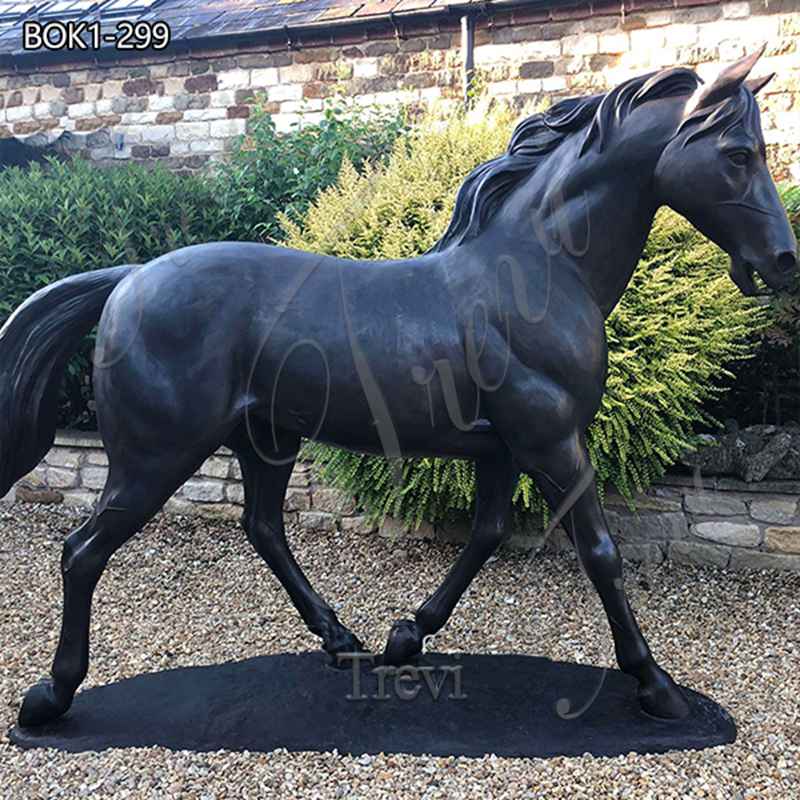
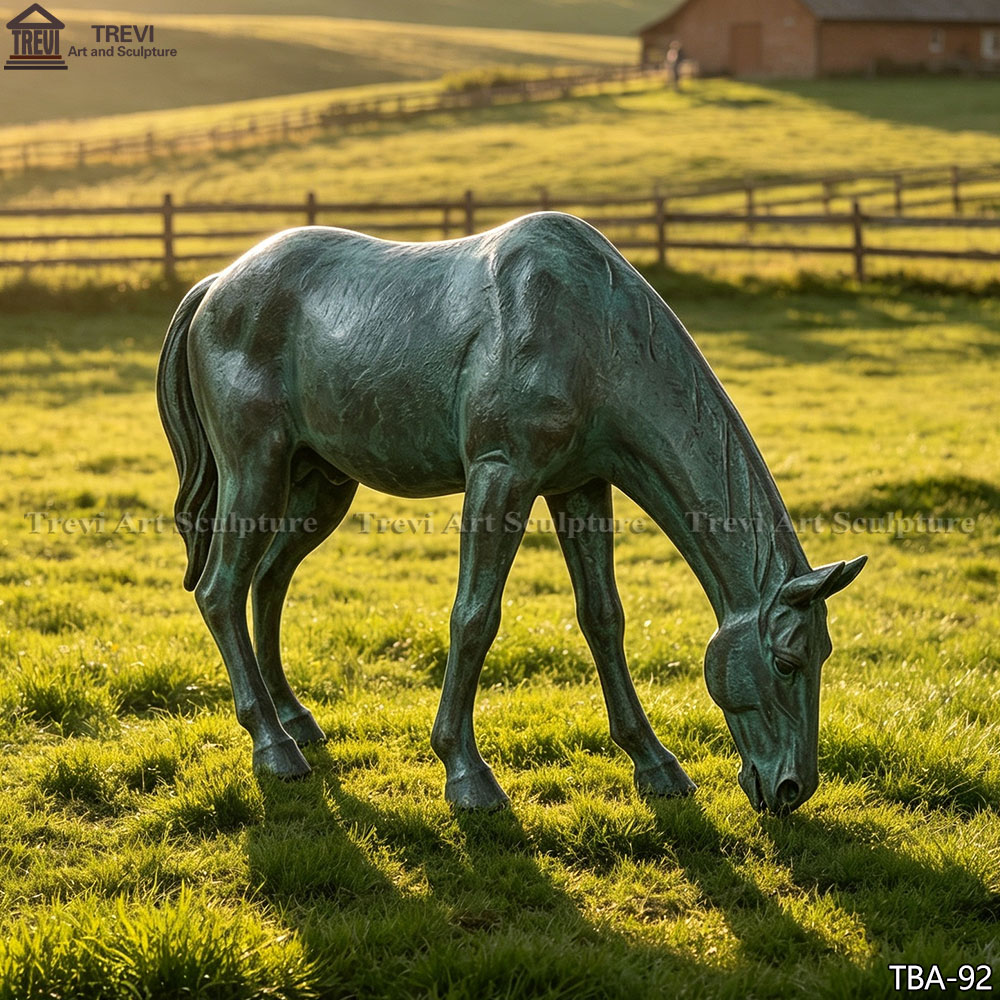
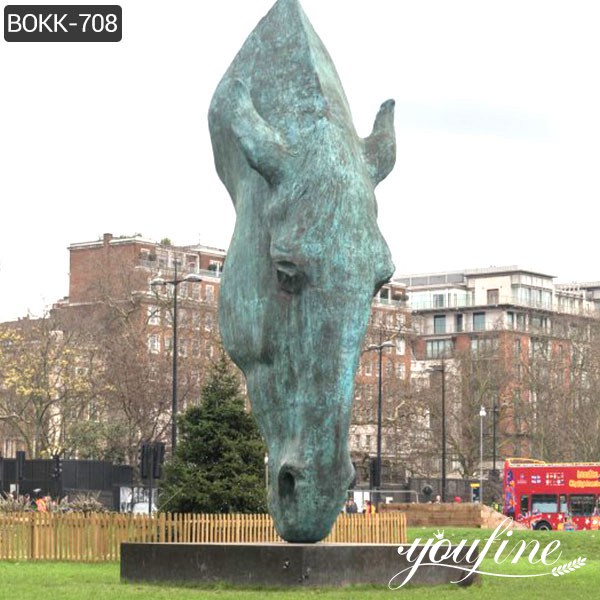
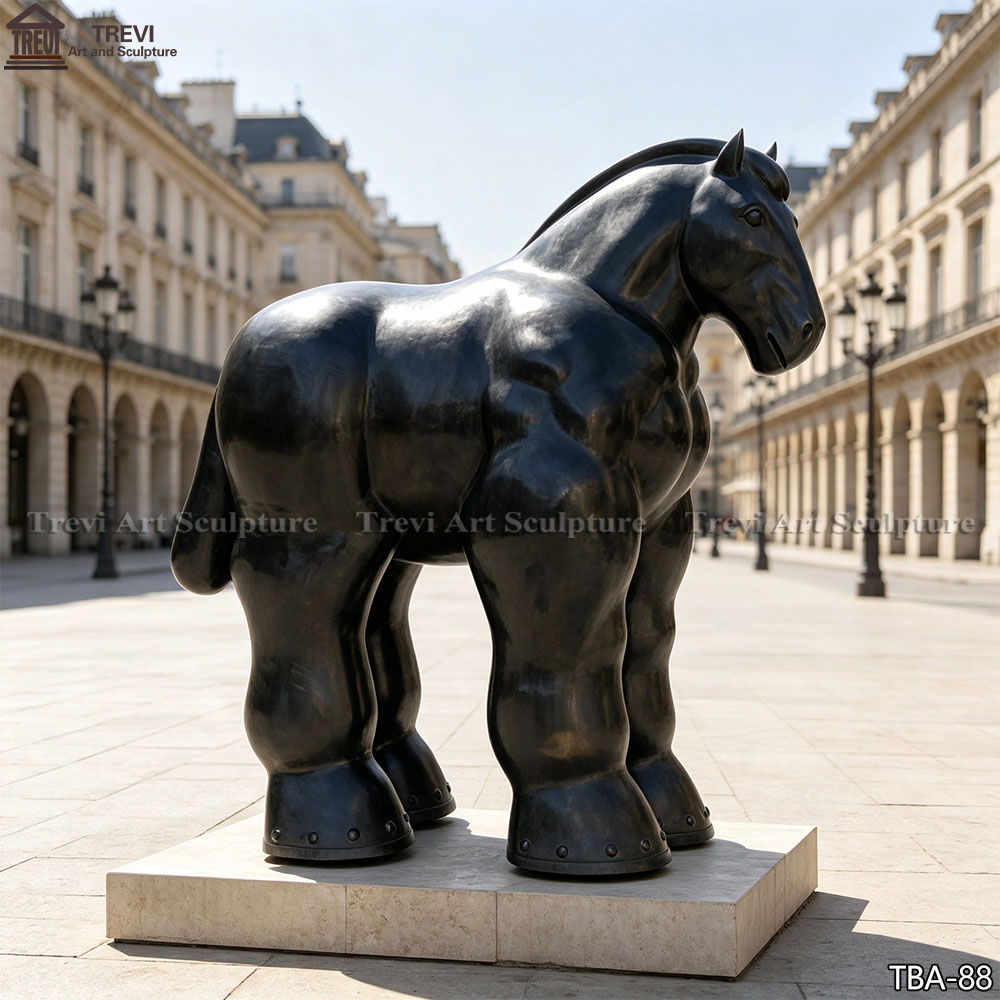
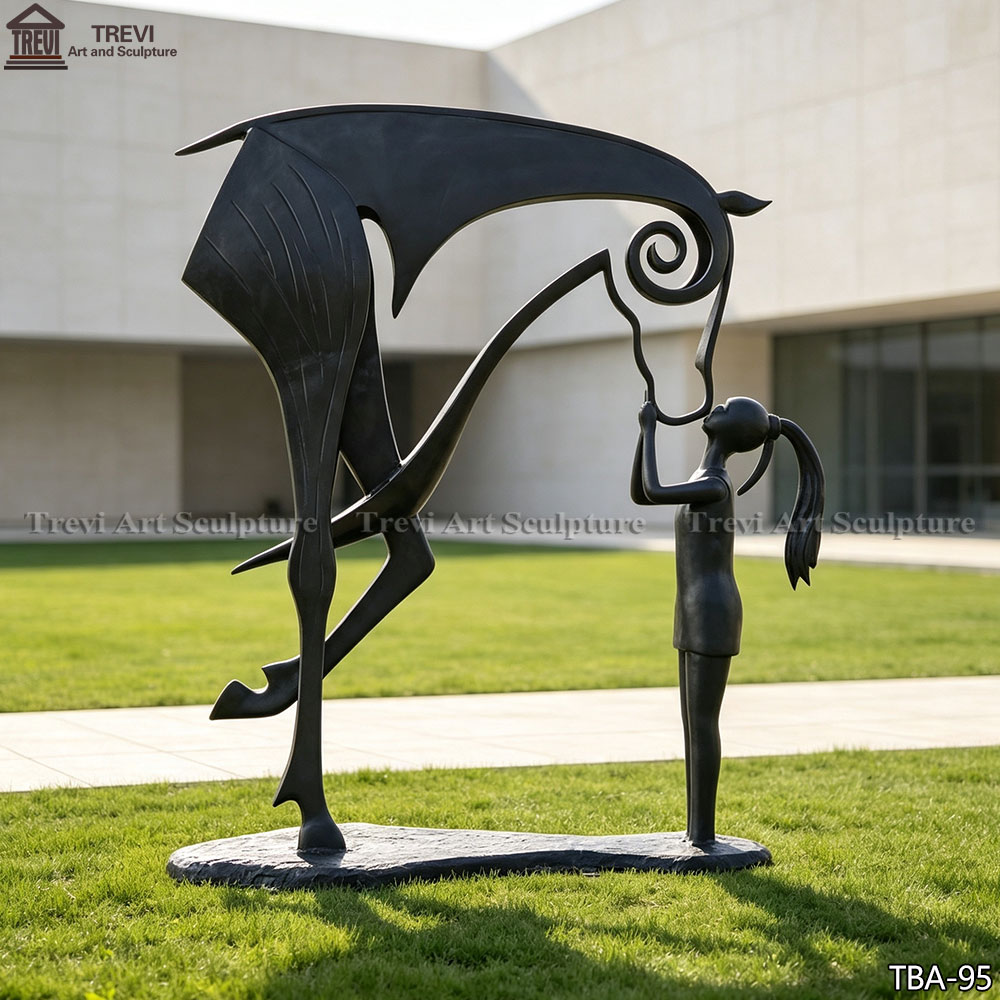
A bronze horse does not require a room filled with saddles and tartan. In a modern interior, the cleanest approach is to treat the sculpture as an expressive silhouette. A standing horse introduces calm horizontal lines; a rearing figure adds a strong vertical; an abstract horse can soften a severe architectural room.
Before choosing a piece, photograph the intended wall or corner from the main doorway. The statue should read clearly from that first view. Allow breathing room around the ears, tail and legs so its outline is not lost against shelves, plants or busy artwork.
Balance scale and placement
For a console, a bronze between 18 and 30 inches high usually has enough presence without crowding lamps or art. On a pedestal, the combined height of base and sculpture should place the horse’s head close to eye level. A full-size work belongs in a double-height room, gallery corridor or a view shared with an outdoor terrace.
Avoid placing a small bronze alone on a large coffee table. Group it with one low stack of books and a simple bowl, leaving the horse as the tallest element. This creates a deliberate triangle rather than a collection of unrelated objects.
Let materials do the connecting
Bronze already carries warmth, variation and age. Repeat that warmth sparingly in a leather chair, smoked oak, aged brass or a tobacco-colored textile. Cool stone, plaster and pale linen provide contrast and keep the result contemporary.
Use a narrow-beam picture light or adjustable ceiling spot to graze the surface from above and to one side. The light should reveal the modeling, not flatten it. A dimmer lets the sculpture shift from daylight accent to evening focal point.
At a glance
- Choose a quiet wall behind a detailed sculpture.
- Use felt or museum wax beneath tabletop bronzes.
- Keep direct heat and harsh chemical cleaners away from the patina.