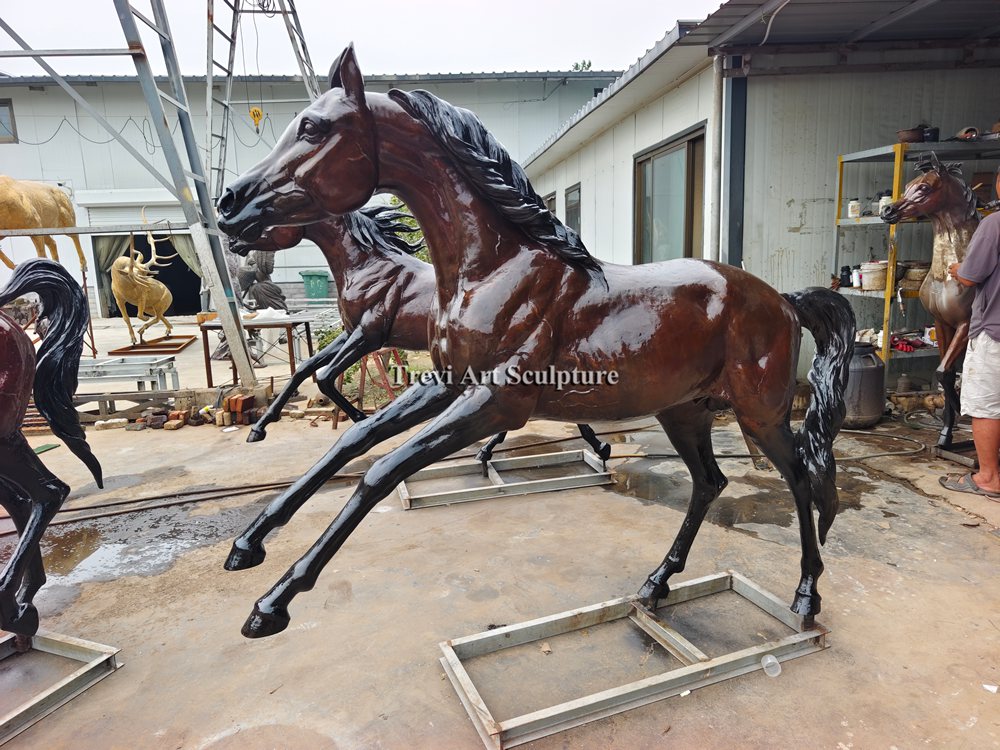
From idea to approved clay
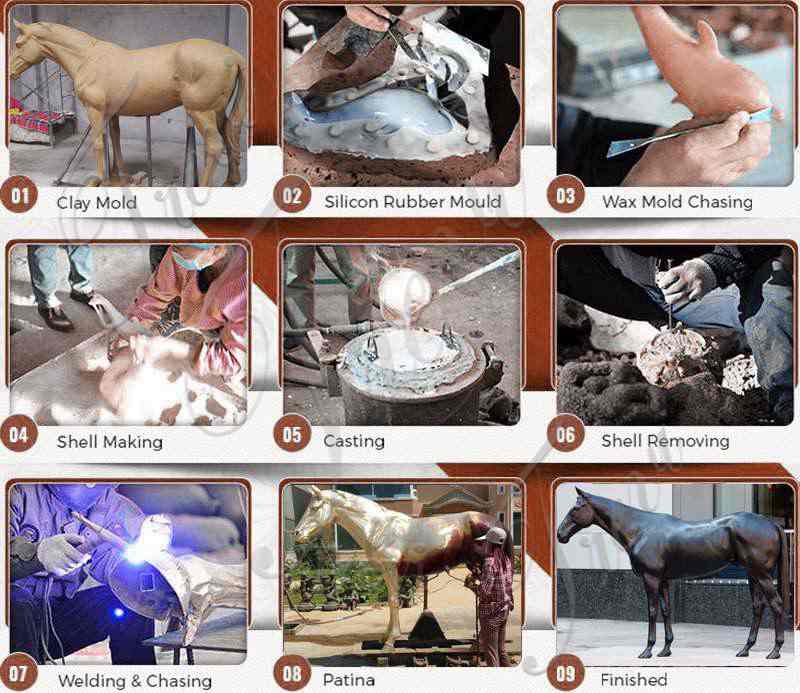
Every convincing bronze begins before metal is involved. The sculptor establishes proportion with an internal armature, builds volume in clay and studies the horse from all sides. Anatomy, breed character and gesture are refined together because a beautiful profile can still fail when viewed from the rear or three-quarter angle.
For a commission, the clay stage is the most important approval point. Changes to expression, tack, pose and portrait likeness are far easier now than after molding begins.
Wax captures the sculptor’s touch
A flexible mold is taken from the approved clay and supported by a rigid outer shell. Molten wax is brushed or poured inside to form a hollow replica. After removal, artisans repair seams, check thickness and add wax channels that will later carry bronze and release gases.
The wax is surrounded by a heat-resistant ceramic shell. Heating removes the wax—giving the process its name—and leaves a precise cavity ready for molten bronze.
Casting, chasing and patina
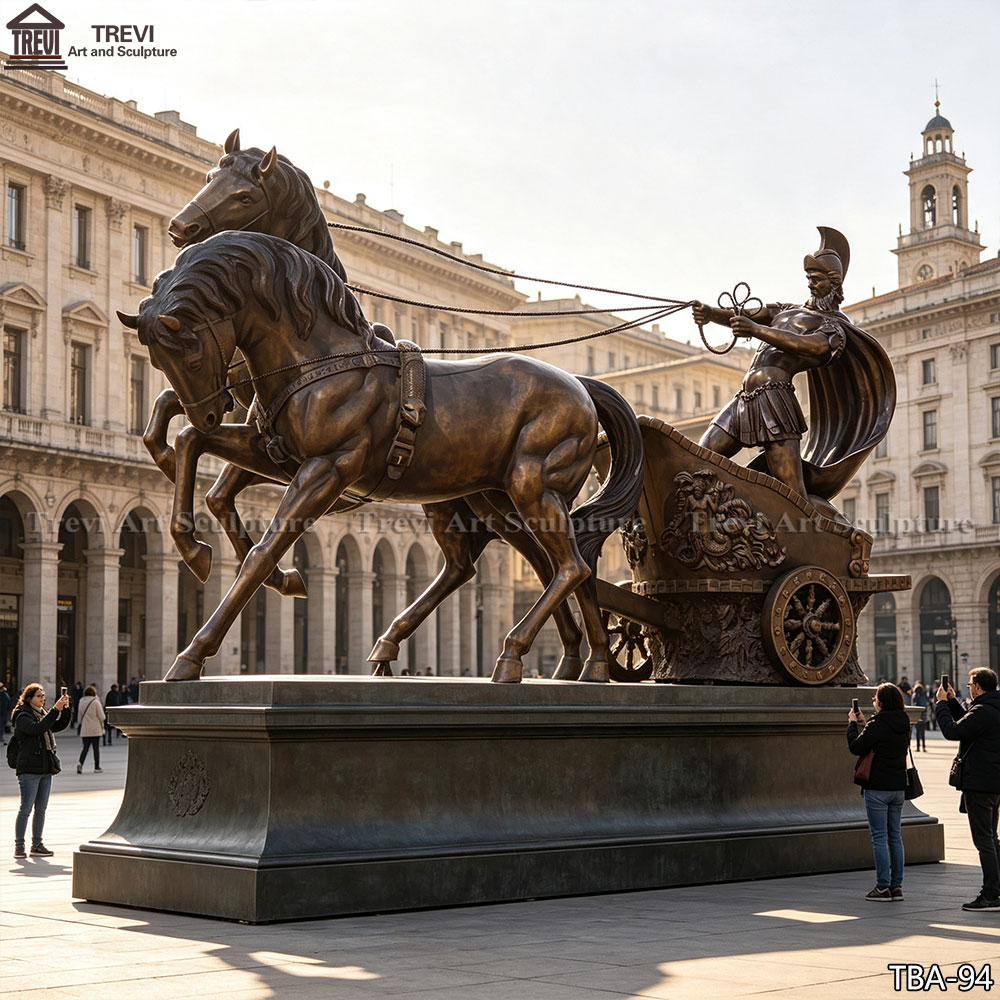
Bronze is poured into the hot shell. Once cool, the ceramic is removed and individual sections are cut free. Large horses may consist of many cast parts. Skilled welders align them, then chasing artists recreate hair, skin and tool marks across every joint until the sculpture reads as one continuous form.
Patina is applied with controlled heat and chemical solutions in multiple passes. Wax seals the finished color and deepens the surface. The quality of this final stage depends on judgment: good patina supports the modeling instead of covering it.
At a glance
- Review the full clay, not only drawings.
- Ask to see chasing and weld finishing examples.
- Confirm the final patina under natural light.